
Packaging waste is an essential part of the broader commitment to sustainable development, the circular economy, and alignment with EU standards
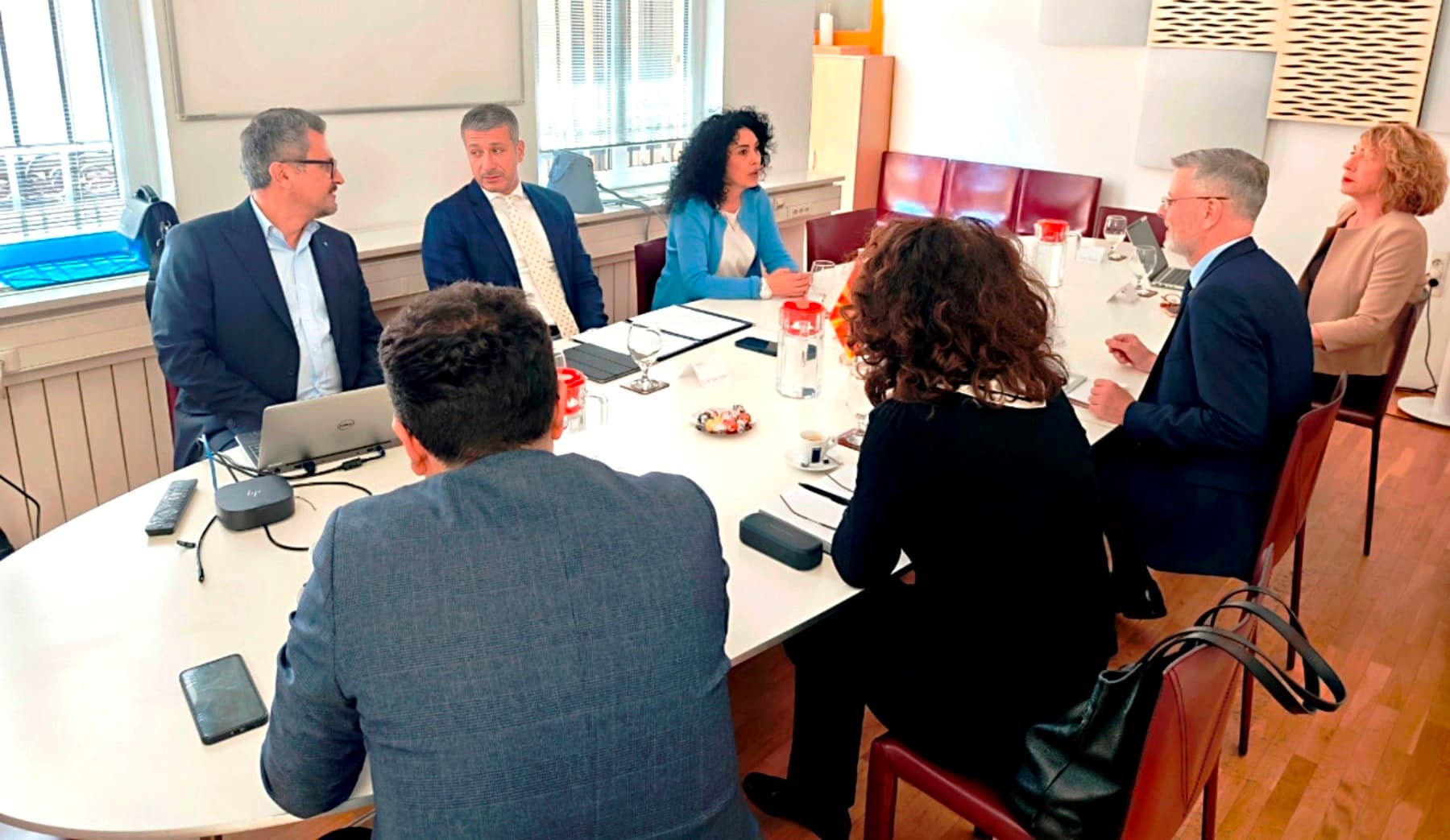
The Deputy Minister of Environment and Physical Planning, Ane Lashkoska, today chaired the first meeting of the Advisory Board for Smart Packaging Waste Management, which was held at the premises of the Embassy of the Swiss Confederation in Skopje.
The meeting was opened by H.E. Christophe Sommer, Ambassador of the Swiss Confederation, and was attended with active participation by the Minister of Local Self-Government, Zlatko Perinski, as well as the Executive Director of Pakomak, Filip Ivanovski, alongside representatives of institutions and partner organizations.
In her address, Deputy Minister Lashkoska emphasized that packaging waste management is no longer just a technical issue, but an essential part of the broader commitment to sustainable development, the circular economy, and alignment with European standards.
"The way we manage packaging waste forms the foundation of our commitment to a modern and responsible environmental policy. Our goal is to build a system that is self-sustainable, modern, inclusive, and fully aligned with European Union legislation, particularly regarding extended producer responsibility," Lashkoska emphasized.
The establishment of the Advisory Board represents a significant step forward toward establishing a stronger, more transparent, and more efficient packaging waste management system. Through this mechanism, institutional coordination is strengthened, greater accountability among all stakeholders is encouraged, and a foundation is created for long-term and sustainable solutions in accordance with European practices and the principles of the circular economy.
Special gratitude was extended to the Government of Switzerland for its continuous, strategic, and sincere support throughout all phases of this process. Lashkoska emphasized that Swiss assistance is an example of true partnership, where international cooperation translates into concrete results on the ground—by strengthening institutional capacities, improving coordination, and creating a functional system that brings real benefits to citizens and the environment.
The role of Pakomak was also highlighted, particularly as a pioneer in implementing the extended producer responsibility system in the country, whose expertise and operational capacity represent an important resource in this transition.
The Advisory Board, established in cooperation with the Embassy of Switzerland and Pakomak, aims to provide strategic direction, better coordination among institutions, and alignment of national policies with European standards and the principles of the European Green Deal.
"Building a modern waste management system is not just about managing waste, it is about shaping the future we want to live in. Our vision is clear: a system that will bring real, environmental and economic benefits to citizens, reduce reliance on landfills, increase recycling rates, and create green jobs," Lashkoska said.
The Ministry of Environment and Physical Planning remains strongly committed to building a functional, transparent, and European-aligned waste management system, where sustainability is not just a policy—but a long-term institutional and societal responsibility.
Source: MoEPP