
A functional waste management system is possible, but it requires a clear vision, partnership, and consistent implementation
Regional coordination and infrastructure investments were the focus of the first panel of the Regional Waste Management Forum, dedicated to building a functional system in the Pelagonia and Southwest regions.
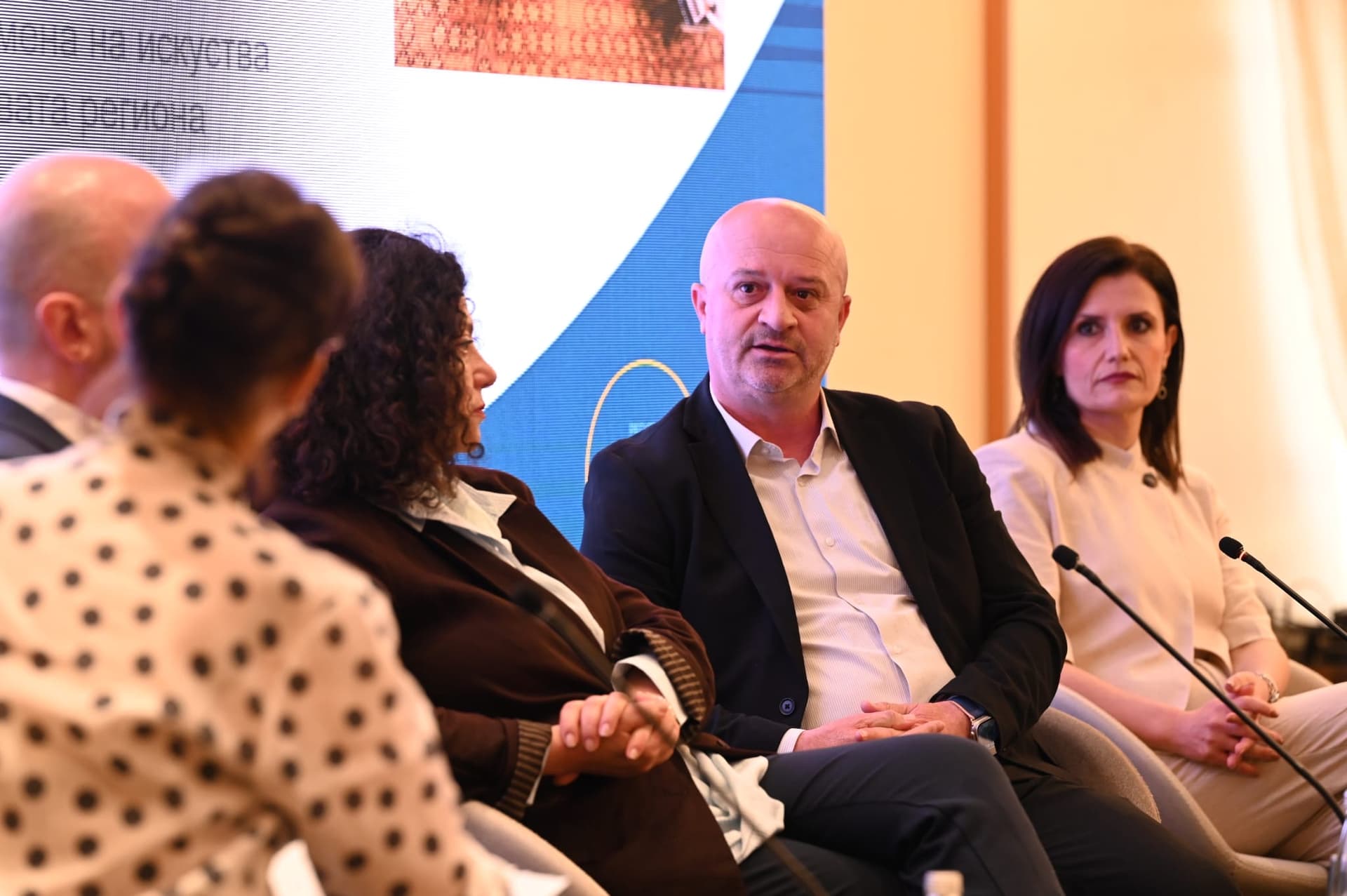
The discussion was opened by Stevche Stevanovski, Mayor of the Municipality of Novaci and Chairman of the Inter-Municipal Waste Management Board (IMWMB); Ana Karanfilova-Maznevska, Head of the Waste Management Department at the Ministry of Environment and Physical Planning; Andriana Stojanovska, State Counselor for Regional Development at the Ministry of Local Self-Government; Pelle Hallberg, waste management expert from the Regional Public Utility Company for Waste Management in Gävle, Sweden; and Emil Angelov, Team Leader at SALAR International.
It was highlighted that the establishment of the Inter-Municipal Waste Management Board (IMWMB) represents a crucial step forward, providing a platform for joint decision-making, alignment of priorities, and coordinated investment planning. Through this mechanism, for the first time, municipalities have the opportunity to act in an organized and coordinated manner.
In parallel, it was emphasized that establishing a functional system is impossible without adequate infrastructure. Construction of the regional waste management center, development of transfer stations and collection centers, and provisioning modern equipment for the municipalities were singled out as priorities. The panelists pointed out that this is a gradual process that requires careful, phased implementation and full compliance with European standards.
Special emphasis was placed on the core concept of the Regional Waste Management System (RWMS), which was presented as an integrated approach encompassing the construction of regional infrastructure, closing down existing landfills, and establishing a modern management structure. It was stressed that the implementation of this system will bring significant benefits—better public health, environmental protection, and more efficient public services.
Experiences from Sweden further confirmed the importance of long-term planning, a stable institutional framework, and continuous cooperation among all stakeholders as key success factors for such systems.
In the second part of the panel, the focus shifted to regional planning as an implementation tool. It was emphasized that the new Regional Waste Management Plan, alongside local action plans, will enable translating strategic goals into concrete and achievable activities. In this process, expert support, data collection and usage, as well as ensuring transparency and inclusiveness, play a significant role.
The panelists agreed that inter-municipal cooperation is essential for accelerating reforms, but that challenge also exists, particularly due to the varying capacities of the municipalities. Continuous coordination, shared responsibility, and active communication between institutions and with citizens were put forward as solutions.
In conclusion, it was emphasized that experiences from other countries, as well as examples from the region, demonstrate that a functional system is possible, but it requires a clear vision, partnership, and consistent implementation.